
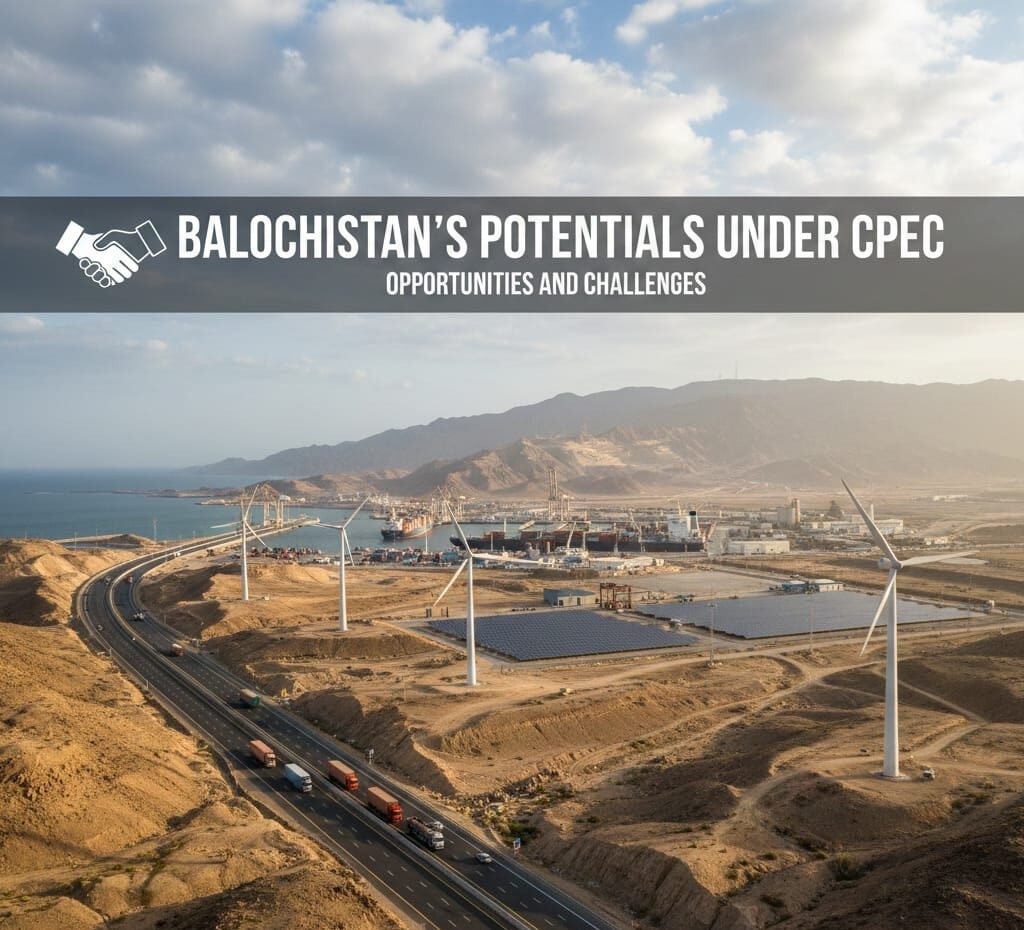
Balochistan is indeed Pakistan's largest province by area, blessed with vast natural
resources like coal, copper, gold, and chromite etc., holding around 75% of Pakistan's mineral
wealth. Its strategic location, along with its diverse communities, makes it a key region for
understanding the impact of CPEC on inclusive economic growth and the overall well-being of its
people. As CPEC continues to take shape, Balochistan is set to play a vital role in promoting
sustainable development and addressing key human security challenges. The completion of
CPEC’s roads infrastructure and energy projects in Balochistan, has not only boosted commercial
activities but also helped connect the province’s remote areas with the rest of the country. The
expansion of the road and railway networks has enabled trade both within and beyond Balochistan,
increasing economic opportunities in its far-flung regions. These projects are improving
transportation systems while also significantly enhancing the quality of life for the people of
Balochistan. To further promote economic growth in the province, investments are being made in
sectors such as agriculture, fisheries, and minerals. There is no doubt that Pakistan’s future
economy is closely linked to Gwadar, and the country’s long-term progress depends on
Balochistan’s development, prosperity, and stability. Despite its strategic importance, the province
remains relatively underdeveloped in terms of social and economic indicators.
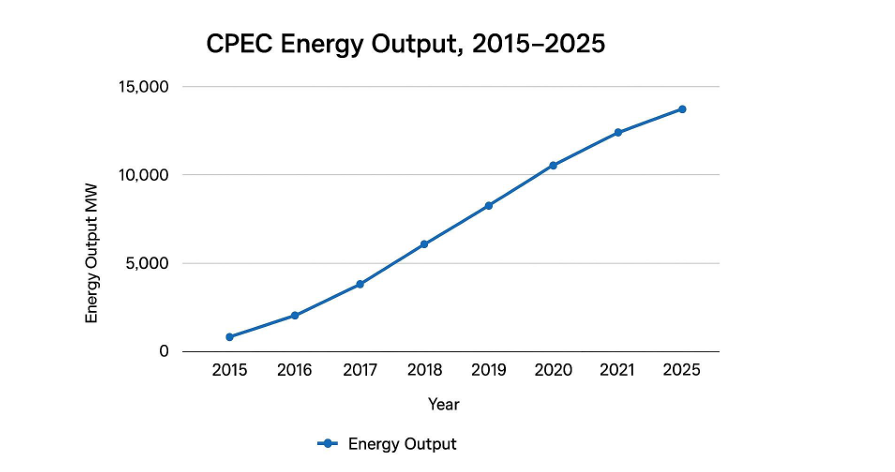
When CPEC began in 2015, Pakistan especially Balochistan was suffering with long daily power
outages 16-18 hours a day, poor road infrastructure, and a slow economy. Today, the
transformation brought by CPEC is obvious; roads, power projects, and economic activity have all
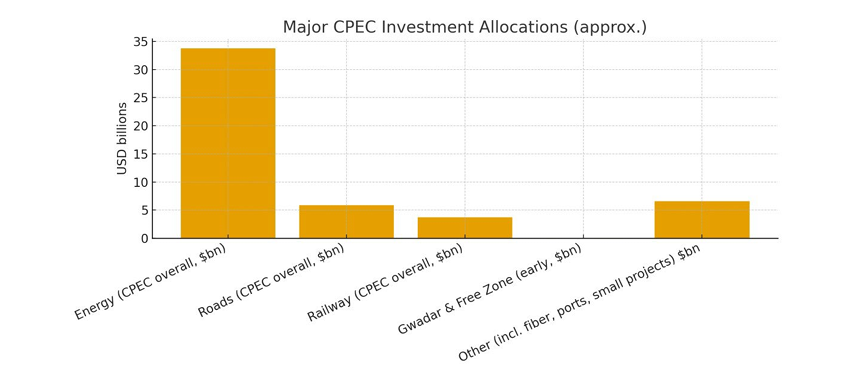
improved, and the province is now better connected regionally. More than $25 billion in
investment has helped upgrade Pakistan’s energy system, transport network, and ports. Over 8,000
MW of electricity has been added through major projects like Port Qasim, Sahiwal, Hub, and
Engro Thar Coal plants, Karot Hydropower, as well as solar and wind plants, which has greatly
reduced the power crisis (Government of Pakistan, 2017; Planning Commission of Pakistan, 2024).
Important road projects such as the Multan Sukkur Motorway, Hazara Expressway, and KKH
Phase-I have also cut travel times and improved mobility. The development of Gwadar Port is
opening doors to global trade, while CPEC has already created over 200,000 direct jobs, with many
more expected in the coming years. Under CPEC, Balochistan’s road infrastructure has seen major
1Dr. Dost Barrech is currently lecturer in International Relations IR Department University of Balochistan, Quetta,
Pakistan. He served as a Research Associate at the Institute of Strategic Studies Islamabad (ISSI) for 5 years during
(2017-2022). Barrech also remained an Advisory Board Member for the Pakistan Journal of Terrorism Research,
National Counter Terrorism Authority (NACTA). He has over 29 research papers published in the W/X/Y Category
of both national and international journals and has 78 articles in different national and international newspapers
covering great power rivalry, Balochistan’s role in CPEC Balochistan security and fifth insurgency. Currently he has
been working on fifth insurgency in Balochistan and impact of BYC in Balochistan’s polity. He can be reached at
bareach87@gmail.com
Research gate link: https://www.researchgate.net/profile/Dost-Barrech
development, including the Khuzdar–Basima Road, Gwadar Eastbay Expressway, Hoshab
Gwadar (M-8) Motorway, and Hoshab–Surab section (N-85), significantly improving connectivity
across the province. Now with the launch CPEC 2.0, the focus is shifting toward inclusive growth,
Special Economic Zones SEZ development, and local value creation certainly ensuring that the
foundation we have built benefits all Pakistanis (CPEC Report, 2025; Energy Ministry data, 2024).
The government looks fully committed to making CPEC projects socially inclusive and
environmentally safe. Communities affected by new infrastructure especially in Gwadar are being
supported through compensation, relocation assistance, and policies that encourage hiring local
people. Vocational training centers are also being set up to help local residents gain the skills they
need to take part in CPEC-related jobs. Every major project goes through an Environmental Impact
Assessment (EIA), and efforts are being made to include green infrastructure, energy-efficient
technologies, and renewable energy as key parts of CPEC’s second phase. The goal is not only to
build roads and ports, but also to improve people’s lives and protect the environment, especially
in areas that have long been neglected. Under vision-2030, development in Balochistan is
progressing rapidly.
The state institutions and agencies have worked with focus and speed to address the province’s
long-standing deprivations. A wide network of development initiatives has been implemented with
the goal of creating a stable and prosperous province. This brings us to a critical question: What
obstacles are hindering Balochistan’s development, and who benefits from keeping its people from
prospering? Those who highlight the province’s backwardness often talk about problems but never
acknowledge the efforts being made to solve them nor do they mention those who deliberately
obstruct progress. It is undeniable that the biggest obstacle to Balochistan’s development is the
constant attempt to disrupt peace. Terrorist groups, acting as tools of Pakistan’s enemies, do not
want development or prosperity in the province. With foreign funding, they are willing to ignite
their own homeland for money.
There is no doubt that Balochistan is the starter of CPEC. The region should have been developed
more than other parts of the country. There are multiple reasons due to which the first phase of
CPEC in Balochistan did not receive enough economic dividends. History is very much necessary
to be understood here. In the presence of the British era, it kept Southwest Balochistan as a buffer
zone and did not invest massively on account of its geostrategic location and rugged mountain and
dispersed areas. Even in the 21st century one cannot find expressway in the whole Balochistan.
More people die in traffic accidents than in the terrorist attacks. Annually 6 thousand people perish
in traffic accidents and ten thousand are wounded annually such situation discourages foreign
investment in the region.
Geo-strategic location of Balochistan under CPEC
Balochistan's geo-strategic location is the biggest assets of the province, having coastal areas adjacent to the Strait of Hormuz connecting Pakistan with three major regions of the world like Central Asia, Middle East and Indo-Pacific. Pakistan’s geo-strategic significance largely depends on Balochistan which is crucial for CPEC. CPEC connectivity with Middle East and Afghanistan is viable only via Balochistan. The potential of Gwadar port could be realized on account of its location in deep waters, surrounded by mountains. This naturally built port is also pivotal for defense. Balochistan is having enough of land that ought to be morphed into productive economic activity. The Sui Gas reserves of Balochistan have been exploited. Copper and coal are extracted in Saindak, and work is going on in Reko Diq. Chinese companies have been working in inland mining in Lasbela and Duddar. There are many minerals gas and oil, resources that could be capitalized under CPEC. Amir Adnan (2023, October 2024) Personal communication [Personal interview].
Balochistan's vast land areas are great asset for industrial sector under mega project. When people
discuss CPEC, they concentrate on roads, trade, and infrastructure. Against this backdrop, the
power sector cannot be downplayed. There is huge potential for developing renewable energy such
as wind power plants in the province which is also environment friendly. On account of
Balochistan's small population, this demographic can be converted as a strength in poverty
alleviation CPEC. To gain more sustainable development and poverty reduction is very much in
Balochistan. (Mir Sadaat Baloch (2024, October) Personal communication [Personal interview].
Given the growing threats of climate change, Balochistan is hub of producing renewable energy
which can mitigate the impacts of the climate change. The province has robust capabilities for
solar energy production. The green belt of Balochistan like Naseerabad Division has been
contributing to the region's energy potential. Meanwhile, successive administrations remained
failed to utilize on this potential by virtue of a lack of irrigation challenges, the destructive
monsoon season, agricultural innovation, the impacts of climate change, and governance failures.
(Zakryia Baloch Personal communication (2024 October) [Personal interview].
The agriculture sector is the backbone of Balochistan's economy, producing great potential, with
horticulture being its most prominent sub-sector offering fruits like apples and grapes. The
province is called the "fruit basket of Pakistan," producing 90 percent of the country’s cherries
grapes, and almonds 60 percent of its apricots, peaches and pomegranates. Most importantly, the
province also produces nearly 70 percent of country’s date production and 34 percent of its apples.
There are more than 0.3 million tons of distinctive apple varieties produced annually, and the
province gives 130 varieties of dates. The Makran division alone is believed to have been
producing around 425,000 tons of dates annually. Sadly, despite this massive production, the
province still lacks a substantial share in the national export of dates. Providing subsidies to
farmers, modernizing the agriculture sector addressing water shortages will further enhance fruit
production. Under CPEC, farmers are likely to have an opportunity to export their valuable
production to international markets paving the way for alleviating poverty.
Agricultural crop improvement and technology adoption in Balochistan directly come within the
horizon of the CPEC partner projects. The modernization of traditional farming techniques is
crucial for producing value chains that enhance the output. Agricultural mechanization is being
implemented through these projects in collaboration with the Asian Development Bank (ADB), as
they introduce modern agricultural equipment, such as tractors, harvesters, and water irrigation
systems, especially designed for the rough terrain of Balochistan. This particular project may lead
to an increase in agricultural production by 25-30% because they are shifting from traditional
farming to agricultural mechanization. Further, the High-Tech Agriculture Project is being
initiated by the government of Balochistan, involves the usage of highly advanced technology like
protected cultivation, applications of biotechnology, and precision farming. The Pak-China
Agriculture Cooperation Forum has set up an Agriculture Cooperation Exchange Center at
Islamabad to facilitate this by facilitating technology cooperation and exchange.
The China–Pakistan Joint Agricultural Technology Laboratory is a collaborative initiative under
CPEC that aims to mechanize agriculture in Pakistan and reinforce food security. This initiative
focuses on equipping farmers and agricultural professionals with practical skills, promoting
climate-resilient crops, and improving dryland farming practices. This can be achieved by
introducing smart farming techniques and the use of AI, which aims to optimize crop management
and increase overall agricultural efficiency & productivity.
Livestock market
Like agriculture sector, the livestock also plays an important role in Balochistan's economy,
modernizing its potential under CPEC would be instrumental for the economic growth of
Balochistan and Pakistan. Balochistan accounts nearly 52 percent of Pakistan’s sheep percent of
camels, and 22 percent of goats respectively. The livestock sector has been providing jobs to
approximately 66 percent of households in arid regions where crop cultivation is almost
impossible. As the population of the world grows exponentially and living standards has been
rising. Resultantly, the demand for pure milk and meat production will also enhance in the near
future converting livestock sector under mega project productive sector of the province will benefit
the people. Balochistan has 40 percent of Pakistan's livestock population and its 70 percent of
population directly or indirectly connected to the sector. The 70 percent peoples’ socio-economic
conditions is likely to be improved under mega project by making significant investments in the
livestock sector. By introducing innovations, coping challenges like inadequate water and fodder
supplies, insufficient access to veterinary services, including scarce grazing pastures, and
improving marketing strategies.
Under CPEC, Pakistan’s livestock sector has benefited from Chinese collaboration in genetic
improvement and advanced breeding technologies, including the establishment of a buffalo
embryo development laboratory in Lahore to enhance milk yields and export potential. In addition,
Chinese experts are supporting capacity building through training in modern animal husbandry
and genetic improvement practices.
Blue Economy Potential
Balochistan is blessed with non-living marine resources, such as minerals, oil reserves shale gas, hydrocarbons, and gravel. These resources remain crucial for global economic flows and will generate economic jobs. Moreover, different species available in the Arabian Sea like sea porpoises, turtle’s cetaceans, fish and whales, are the valuable assets in the context of blue economy requiring a fresh thinking to be utilized under CPEC to reduce poverty. Balochistan has the sixth-largest mangrove area in the globe. The mangroves have been contributing nearly $4 billion to annual export earnings of Pakistan. The province coastal regions is having spectacular landscapes. Pakistan under BRI could develop Public Sector Development Programs (PSDP) adjacent to the Makran Coastal Highway resulting in production of job opportunities. The stunning beaches of Hammerhead, Gwadar and Astola Island will prove effective into lifting tourism sector. As far as the report of World Travel & Tourism Council (WTTC) was concerned, the travel and tourism sectors had contributed $8.3 trillion to the global economy and reinforced 313 million jobs in 2017. By capitalizing the splendid landscapes and historical sites of the province, the region would become a tourist hub for both foreign and domestic tourists improving Pakistan’s soft power and boosting the economy and alleviating the poverty.
Natural Resources
The geostrategic location and sufficient natural resources of Balochistan remain to be seen as a buzzword but the state so far has remained failed to capitalize on the province natural resources. CPEC turns to out to be a game changer for natural resources of Balochistan. The province is having 70 percent of the natural resources of the country encompassing nearly $3 trillion in natural resources, including, natural gas, black pearls copper, chromite, gold, oil and precious stones. The provincial government of Balochistan is interested in capitalizing on province natural resources under CPEC. The provincial government takes extra interest in Chinese companies to boost growth in its mining industry. On the other hand, mineral extraction in Balochistan has been a contentious issue. Local masses are unhappy with extraction of natural resources, the abundant natural resources have not alleviated the poverty and people are still disenfranchised. The extraction of natural resources has also contributed to the intensification of the insurgency. Balochistan has a substantial natural gas industry, large-scale mining and efforts have not yet been successful in tapping these resources. Arguably, organized and proper resource extraction under CPEC, and granting the province its rightful share by and large will erode the insurgency in the province.
Tourism potentials of Balochistan
Balochistan holds immense tourism potential due to its diverse natural, historical, religious, and ecological assets. The province is blessed with a 760 km-long coastline, having key ports like Gwadar, Jiwani, Pasni, and Somiani, fertile marine ecosystems producing more than 60 species of fish, rare sightings of the Arabian Humpback whale, and attractions such as Kund Malir Beach and Astola Island. Balochistan is also home to Mehrgarh, a 9,000-year-old civilization site providing vital insights into early human civilization and attracting foreign travelers. Religious tourism is centered around Mata Hinglaj Temple (Nani Mandir), where more than 250,000 Hindu pilgrims visit annually, reflecting interfaith harmony and shared respect. Railway tourism through the historic Bolan Pass, with its tunnels and bridges built during the British era, continues to fascinate rail enthusiasts worldwide. Ziarat Valley, with its ancient second largest juniper forests in the world, wildlife diversity, seasonal beauty, and unique climate, represents one of the province’s most valuable natural resources. Similarly, Hingol National Park, the largest national park in Pakistan, combines mountain, desert, and marine ecosystems, hosts rich biodiversity, archaeological significance, and iconic landmarks such as the Princess of Hope. It is very unfortunate that the largest and historic part of Pakistan so far has not been capitalized, while such natural, religious, and historical landmarks require a peaceful and stable environment to attract tourists from other parts of Pakistan and the international community.
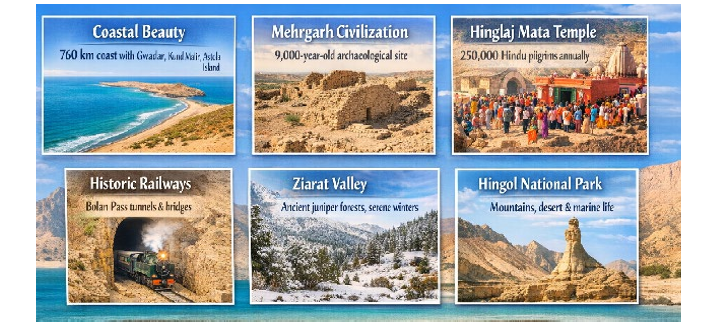
The tourism potential of Balochistan requires a peaceful and stable environment to attract national and international tourists.
Insurgency Challenges and Threats to CPEC Projects
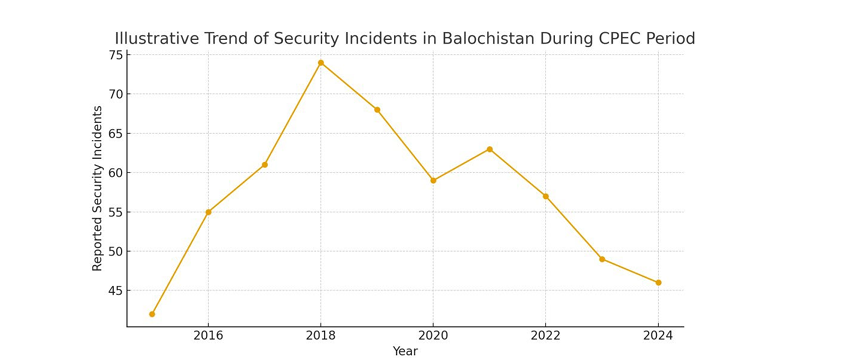
For decades, Balochistan has faced recurring waves of low-level militancy, keeping the province in a state of continuous uncertainty and disruption. This type of insurgency has arisen from grievances over political autonomy and the exploitation of resources. This has now escalated into a highly intensified insurgency, with militant groups like the Baloch Liberation Army (BLA) targeting not only CPEC and related projects, along with the Chinese nationals assigned there, but also provincial installations and non-local residents. These type of insurgency and militancy are now becoming a major obstacle to both local and foreign investment, not only in CPEC and related projects, but it could also potentially undermine the social fabric of society.
Perceptions of Exclusion and the Governance Gap in Balochistan
Another perspective or narrative in the local community is based on what is widely seen as the entrenched status quo and the broader socio-political and economic imbalance. For decades, the state’s dealings with Balochistan have been guided by a centralized and extractive mindset. Key decisions related to CPEC are made almost entirely at the federal level, mainly in Islamabad and within the specific establishment, while the provincial government and local communities remain largely sidelined. This continues the old colonial mindset, or center-periphery pattern, in which Balochistan and its resources are seen more as a region to be administered and exploited rather than as a genuine partner in development. This further reinforces the prevailing perception that the province and its people have little say in major planning and policy decisions. In other words, a true sense of political ownership is missing, which weakens the entire process.
Security Challenges and Their Economic Consequences
The issue of security is also among the most important challenges of the seamless implementation
of the CPEC in Balochistan. Since 2006 the province is in its fifth wave of insurgency which has
been the most disruptive and severe wave in the history of the province. This stage is accompanied
by the appearance of CPEC as a representative element of the BRI, which is why the local conflict
dynamics are interconnected with the interests of the region and the world in general.
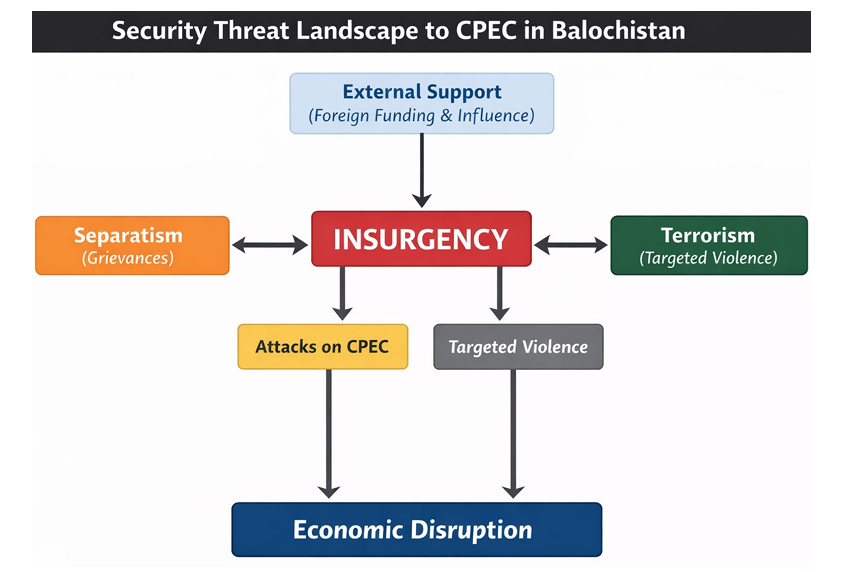
The insurgency in Balochistan is a long-term conflict of non-state actors that aim at destabilizing
the authority and legitimacy of the state. This has been blurred in Balochistan whereby a number
of ethno-nationalist groups have integrated insurgency tactics with terrorist tactics. Other groups
like the BLA, Baloch Republican Army (BRA) and the Baloch Liberation Front (BLF) have
become major players in this conflict. Basically, the insurgency is motivated by the underlying
political, economic and security grievances. Several Baloch insurgents believe that the federal
government had refused to accord them proper political representation, equal economic
opportunities and ownership of their natural resources. The issues of militarization, forced
disappearance, and unequal development have contributed to the local bitterness. These tensions
have been intensified by the strategic importance of Gwadar Port and centrality of Balochistan in
the regional connectivity under the BRI, which has made CPEC the center of militant opposition.
The militant activity in Balochistan has taken a significant turn to attacking the infrastructure and
people associated with the corridor following the initiation of CPEC in 2013. The attacks have
varied in the form of attacks on law enforcement agencies to sabotage of roads, power projects and
communication networks. A climate of fear and uncertainty has also been developed when Chinese
nationals as well as local workers who have been employed on CPEC projects have been targeted.
These attacks have slowed down implementation of projects and also reduced drastically the
movement of Chinese engineers and technical personnel within the province. The environment of
threat is now more complicated because of the increasing coordination of different militant actors.
Cooperation among Baloch rebel forces, splinter-factions of the Tehreek-e-Taliban Pakistan (TTP)
as well as sectarian formations has escalated the magnitude and intensity of the attacks. This
changing militant group has made Balochistan a multi-layered conflict area that has made it hard
to manage security. Also, there is the supposed external funding using religious networks and
foreign sponsors that has brought an international aspect to a problem that was previously mostly
domestic.
Persistent security threats ranging from attacks on infrastructure to assaults on Chinese engineers,
workers and security convoys have not only slowed down the pace of development, but also
resulted in the increase of costs, and shaken the investor’s confidence. From 2019 to 2025, around
14 attacks were carried out on Chinese citizens and companies in Balochistan, causing several
causalities. According to a report of the Ministry of Interior, 12,000 security personnel have been
deployed to protect Chinese workers under CPEC, costing more than 10 billion rupees annually.
Hence, it can be rightly inferred that security concerns have played a critical role in the under
utilization of the potential of associated projects.
International Strategic Rivalries Affecting CPEC and Regional Stability
CPEC is not only an economic project but also a focus of global strategic competition. Since India and Pakistan have an extended antiquity of strain and both are nuclear power, so the BRI faces grave geopolitical challenges within Pakistan. India has been engaged in the dissemination of propaganda or media warfare campaign to tag CPEC as a debt trap. In the similar context Pakistan government has claimed that India has established a specific cell to sabotage the CPEC and its allied development specifically in Balochistan using its intelligence agency RAW. Further as per official narrative India has been involved in financial and material support to militant organization like BLA and BLF and they have irrefutable evidences revealed on different forums. The arrest of Kulbhushan Jadhav is frequently presented as key evidence supporting these claims. This perspective highlights the destabilizing efforts targeting Gwadar Port, CPEC’s development, and Balochistan as a whole.
From Strategic Port to Economic Powerhouse
The success of CPEC precisely in Balochistan is closely linked to efforts aimed at building local trust, improving security, ensuring transparent and efficient institutions and create a more business-friendly environment for investors and communities alike. In terms of development planning, Gwadar should be transformed into a fully functional deep-sea port similar to Karachi Port and Port Qasim by ensuring high cargo handling capacity, seamless hinterland connectivity, and the development of supporting industrial, commercial, and corporate infrastructure. This may be achieved by creating stability and robust provision of security. Accordingly, the Government of Balochistan should take more institutional responsibility of security related to Gwadar port and CPEC by improving coordination with the federal Govt, Army, Frontiers Corps, and the local law enforcement agencies including the police and levies. Inclusive development focuses social welfare, education, healthcare, job creation aiming to integrate marginalized local communities into economic growth rather than just infrastructure building.
CPEC’s Development Impact at Local Level
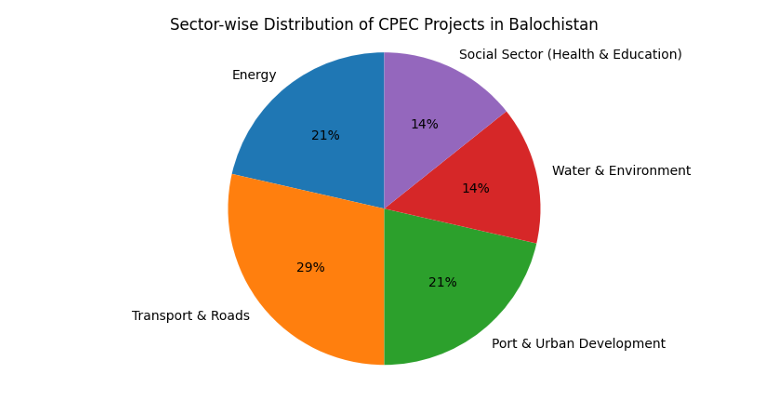
To date, the CPEC has contributed evidently to Balochistan’s development through investments
in energy, transport infrastructure, ports, and social sectors. In the power sector, the 1320-MW
Hub coal power plant has strengthened electricity supply to the national grid. Road connectivity
has improved through projects such as Khuzdar–Basima Road, Surab-Hoshab Road (N-85), the
Eastbay Expressway and the M-8 motorway from Gwadar to ratodero facilitating regional mobility
and trade. The construction of the new Gwadar International Airport, along with the expansion of
Gwadar Port and the establishment of the Free Zone, has enhanced the province’s trade and
transport capacity CPEC Portal. In addition to large-scale infrastructure, CPEC has supported
urban planning and public welfare initiatives, including the Gwadar Smart Port City Master Plan,
clean drinking water schemes under the PSDP, a technical and vocational training institute in
Gwadar, and the Pak-China Friendship Hospital. Further social development efforts include a 1.2
MGD desalination plant in Gwadar, the installation of 15,000 solar-powered street lights, and the
upgrading of the emergency center at Bolan Medical Complex in Quetta, reflecting the broader
developmental scope of CPEC in the province. Development that ignores community needs, good
governance, and environmental protection is unsustainable and cannot lead to long-term
prosperity.
On the other hand, the development of Gwadar Port into an international hub, along with
the expansion of road networks, is boosting economic activity and contributing to overall
improvements in the provincial economy. Over the past two decades, CPEC-led road infrastructure
has reduced travel time between Quetta and Gwadar from up to 24–36 hours to about 8 hours,
significantly transforming connectivity and socio-economic interaction in Balochistan. New
projects are generating employment opportunities for the local population, particularly in the
infrastructure and commercial sectors. Moreover, the provision of electricity, roads, and other
essential facilities is accelerating development in historically underdeveloped areas of Balochistan,
including cities such as Turbat and Panjgur. It is often argued that CPEC projects can help reduce
terrorist incidents and promote socio-political stability, as economic improvement generally
contributes to better security conditions, provided that the benefits of development are directly
transferred to the local community. Transforming Gwadar into a commercial hub is placing
Balochistan on the global map and encouraging international investment. Overall, CPEC is a major
initiative that has the potential to set Balochistan on a path of sustained development by improving
its economic landscape and positioning it as a key regional hub.
To ensure sustainable success of CPEC in Balochistan inclusion of local communities at every level must be prioritize. This may be done by addressing their grievances, and implement practical policies adopting governance reforms, social inclusion, public engagement, and responsible technology, thereby aligning its long-term benefits with Balochistan’s interests. Nevertheless, although CPEC presents opportunities of structural change, industrialization and expansion some development impacts of CPEC in Balochistan are outlined below: -
Infrastructure & Connectivity Development
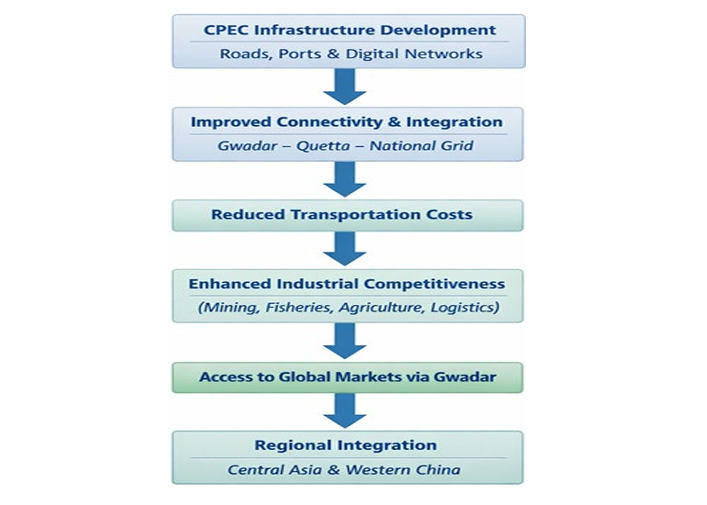
• Infrastructure & Connectivity Development by Infrastructure upgrade in ports,
roads, and digital networks & by Road Network Integration resulted in improved
connectivity, enabling trade, mining, fisheries, and manufacturing.
• For industries such as minerals, fisheries, agriculture, and logistics, reduced cost of
transportation increases competitiveness.
• CPEC transport corridors can connect mining sites to Gwadar for global export.
• Improved connectivity positions Gwadar as a regional transit point linking Central
Asia and Western China.
• Balochistan’s isolation is gradually diminishing as new highways cut travel time
between Gwadar, Quetta, and the national grid.
Infrastructure and Connectivity Development in Balochistan under CPEC
Gwadar Development
• Gwadar Deep Sea-Port & Free Economic Zone development (Phase-I attracted
investment in fisheries, manufacturing, cold storage, and trade-oriented services).
Industrialization opportunities through Gwadar Free Zone and SEZs
• Gwadar International Airport & Smart Port City Projects
• Gwadar University, vocational institutes, and training centers can elevate the
region’s human capital.
Mineral Wealth Integration
• Balochistan has Pakistan’s largest reserves of chromite, copper, gold, lead, zinc,
barite, limestone, and rare earth elements
• CPEC transport corridors can connect mining sites to Gwadar for global export.
• Integration into the regional economic architecture.
• Employment and skills development potential.
It is difficult to assess the impacts of the project with precision due to the absence of clear,
Balochistan focused datasets.
Challenges to CPEC Implementation in Balochistan
Several interconnected challenges have constrained the complete translation of CPEC projects into tangible benefits for Balochistan. Security and insurgency emerge as the most significant constraints, reflecting the persistent law-and-order situation that continues to undermine investor confidence, disrupt project execution, and necessitate heavy security deployments. They are closely tied to deeper political tensions, weak institutional capacity, and long-standing socio economic & political-economic inequalities. Together, these interconnected constraints make it difficult for CPEC’s potential to turn into lasting, wide-ranging progress for the province and local community. Hence the local community views them as part of the exploitative status quo. The security issue like insurgency is the grave threat to CPEC, as evidenced by five suicide attacks in the year 2024 and seven such attacks in 2025. Arguably, security is the primary issue without improving security it is unlikely that Balochistan will fully reap the benefits of CPEC.
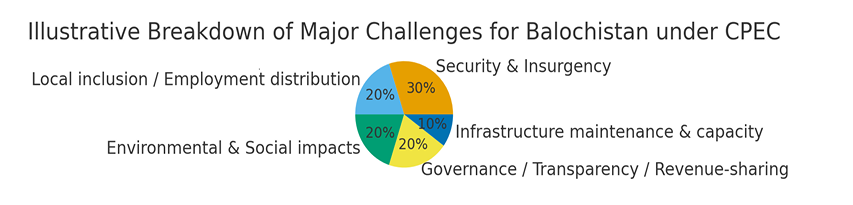
Furthermore, weak institutional capacity, poor governance structures and lack of effective coordination between federal and provincial authorities have limited the successful execution of CPEC’s projects to some extent in Balochistan. While in the remote areas of Balochistan limited connectivity and poor access to markets have slowed the pace of development. The CPEC’s security-centric approach and lack of community involvement also resulted in the local mistrust and resistance.
The Role of Local Government
In the backdrop of CPEC the local government in Balochistan plays a vital role in converting the
strategic and economic potential of CPEC to tangible benefits for local communities. The role of
local Govt. includes planning, implementation, supervision and community involvement at every
level. As the second phase of CPEC aims to improve security conditions, infrastructure shortfalls,
and institutional weaknesses. Political synergy between the provincial and the federal Govt. need
to be further improved on the security issue. To enhance the effectiveness of existing Joint
Cooperation Committee (JCC) and Joint Working Groups (JWGs), the role of provincial
governments must be clearly defined and treated as critical to CPEC implementation. While the
JCC provides strategic direction and the JWGs oversee sector-specific execution, provincial
governments should be formally integrated into planning and implementation, especially in
security, coordination, and community engagement. Inter-agency collaboration should be
improved with the help provincial law enforcement agencies (LEAs). Local government can
contribute to improve the prevailing condition by supporting security and counterinsurgency
operations, ensuring political oversight. It may also play role to winning hearts & minds as well
the community trust for sustainable development in the province.
Provincial Govt. should strengthen police & LEAs, launch dedicated security forces for CPEC
projects, and provide specialized training to security personnel. The use of modern surveillance
technologies, including CCTV systems and drones, should be expanded, while police posts and
checkpoints along CPEC routes must be fully activated. Effective intelligence coordination and
information sharing between provincial & federal government, and intelligence agencies is
essential for the timely identification and mitigation of security threats. Equally important is the
inclusion of local communities through employment opportunities, engagement with tribal elders
and community leaders, and continuous interaction with the business community. Such measures
not only enhance local ownership, improve law and order in Balochistan, and ensure the safety of
Chinese and other investors and the continuous implementation of CPEC projects, but also enable
the common people to realize and experience the true and tangible development emerging with
CPEC in the Balochistan.
Policy Suggestions to Enhance CPEC’s Impact in Balochistan
To maximize the benefits of CPEC for Balochistan from strategic port to economic
powerhouse, a comprehensive policy framework is required that addresses social welfare, security,
governance, economic development, and environmental protection. Pakistan must strengthen local
trust and security, ensure transparent and efficient institutions, and create a more business-friendly
environment for both investors and local communities. Streamlining regulatory procedures and
reducing bureaucratic hurdles to attract investment in SEZs. Security and stability mechanisms
must be strengthened through enhanced Pakistan-China security cooperation. Community
participation in safety initiatives by a safety co-construction model, involving local stakeholders
and ensuring secure project implementation, may prove to be more effective. The local community
should be provided with education, healthcare, employment opportunities, and modern
infrastructure, so that Gwadar becomes not only a strategic port but also a fully functional
commercial and economic hub.
Enhance transparency and accountability by regularly publishing project details, financing terms,
and progress reports, thereby building public trust and reducing the risk of corruption. To
strengthen governance and public confidence, project details, financing terms, and progress reports
should be published regularly, ensuring transparency, fostering accountability, and minimizing
opportunities for corruption.
CPEC now stands at a critical turning point. It has the potential to become the pathway to
Pakistan’s economic revival, or it could turn into another missed opportunity due to global tensions
and internal challenges. The outcome depends on Pakistan’s choices.
Some further policy recommendations are outlined as follows:
o Activate Special Economic Zones (SEZs): Create a favorable environment to attract Chinese
industries to SEZs, boosting local employment opportunities.
o Integrate local industries: Adopt policies to involve Pakistani suppliers and workers in CPEC
related projects.
o Prioritize ML-1 project: Accelerate work on this key railway project, which serves as the
backbone of the transportation network.
o Maintain policy continuity: Most importantly ensuring a consistent and unified CPEC policy,
regardless of changes in political leadership, is essential for maintaining project stability &
promoting sustainable development.
• Balochistan under CPEC has to be utilized in the context of geo-economy rather than geo
politics which has caused irreparable damage to the province.
• Local politicians & leadership should be actively involved in the decision-making forums
for CPEC and its related projects, particularly under CPEC 2.0, to ensure that the
province’s interests are fully considered and safeguarded throughout the planning and
execution process.
• Enhance agricultural cooperation: Collaborate with Chinese experts to introduce
innovation in agriculture, while focusing on branding and marketing. Pakistan has to learn
from China’s agricultural modernization, following the Chinese model will lead the path
of development in Balochistan. Chinese and Pakistani institutions may jointly develop
modern storage and warehousing systems to protect agricultural produce, including storage
warehouses, interim storage units, and port-based warehouses. Vegetable processing plants
may also be established.
• Though Balochistan is called "fruit basket of Pakistan,” sadly, the province fruits are not
exported to international markets even under mega project. Pakistan needs to get into
introspection and should work on export of Balochistan’s fruit to the international market.
China has been importing cherries from Chile located in Latin America. Pakistan ought to
explore cherries from Ziarat and Kalat to China under CPEC. Exporting cherries of
Balochistan will encourage the farmers of the province.
• Pakistan should adopt the Chinese development model to modernize and strengthen the
livestock sector in Balochistan.
750 km coastal areas of Balochistan have to be utilized for blue economy and tourism
sector under CPEC.
• Strengthen regional relations: Improve ties with neighboring countries, including
Afghanistan and Iran, to prevent disruptions in trade and connectivity projects. Pakistan
has altered its National Security Policy NSP from geo-politics to geo-economic aimed at
improving ties with the neighboring countries. Having better ties with Iran and Afghanistan
will prove instrumental in Balochistan economic potentials. Promoting connectivity with
Afghanistan would boost Balochistan’s GDP per capita and will also improve Pakistan’s
trade relations with Afghanistan and Central Asian states.
• Pakistan’s illegal trade with Iran and Afghanistan surpasses that of its legal trade, which
impedes human development in Balochistan. Legal trade under CPEC be promoted and
enhanced to exceed illegal activities.
• Balochistan’s relatively small population can be considered a blessing in disguise, as the
establishment of SEZs and the strategic utilization of the province’s potential under mega
projects can significantly contribute to poverty alleviation.
• Special universities in Balochistan ought to be established with the aim of increasing
education and skills of the 21st century.
• The youth of Balochistan have high expectations from CPEC, and the provision of Chinese
scholarships can equip them with 21st century skills, enabling their meaningful
participation in the corridor’s development.
• Climate change is serious threat to Balochistan’s agriculture sector. Beijing and Islamabad
need to promote climate diplomacy under mega project to protect the province’s
agricultural future.
• The Balochistan’s uncultivated 11.77 million acres of land in Balochistan ought to be
developed under BRI, which will generate jobs and will reduce poverty. Both the federal
and provincial governments have to work collectively to irrigate barren lands of the
province paving the way for self-sufficiency.
• Provincial Strategic Communication Strategy: The government should create a
communication framework to counter misinformation, insurgent propaganda, and
perceptions that CPEC represents economic colonization. This may be done by involving
tribal elders, youth, civil society, and local political leaders to trust building and
establishing that CPEC is a genuine development opportunity for the province.
Nevertheless, the second phase of CPEC could be turning point if the real potentials of Balochistan are capitalized. The second phase of CPEC prioritizes special economic zones, agriculture, mineral resources, and the digital and IT sectors. Given Balochistan’s vast untapped potential in these domains, effective utilization could redefine the province’s development path. As mentioned earlier, Balochistan is fruit basket of Pakistan. Balochistan’s cherries and the other horticultural produce can be exported to China and other countries by improving road infrastructure, mitigating the threats of climate change, and enhancing awareness among the farmers to increase its yield and improving the post-harvest techniques for exporting to other countries. CPEC is also considered as a key driver of peace and development in Balochistan, enhancing economic activity, employment, education, and healthcare through the development of Gwadar Port and improved infrastructure such as roads and electricity. By attracting international investment, CPEC has the potential to transform Balochistan into a global commercial hub, contributing to long-term peace and socio-economic prosperity. However, concerns raised by local communities and the need for better governance remain important to address. Hence the role of CPEC in Balochistan in economic development, employment opportunities, infrastructure improvement, maintaining peace and stability is clearly evident.
CPEC has contributed to the development of Balochistan, and notable improvements in the province’s basic infrastructure are increasingly visible. The construction of new highways and roads have enhanced trade, mobility, and local communities’ access to essential services. Gwadar Port is the heart of CPEC, which has transformed from a small fishing town into a major economic hub. The development of Gwadar is expected to boost local industries, increase employment opportunities, and support the region’s overall economic growth. CPEC’s projects have addressed energy shortages in Balochistan by establishing power plants and upgrading the energy grid. The broader economic development brought by these initiatives including the establishment of industrial and economic zones aims to strengthen the local economy. Small businesses and local industries, especially in sectors such as fisheries, mining, and agriculture, have benefited from improved access to markets. Modern infrastructure in healthcare and education has significantly improved hospitals, schools, and other essential social services across Balochistan. The Chinese and Pakistani governments have also invested in socio-economic development programs focused on education and healthcare for the local population. The development of infrastructure around Gwadar and other natural attractions in Balochistan is also promoting tourism. CPEC enables Balochistan’s integration into the regional economic architecture, opens new industrialization opportunities through the Gwadar free port and SEZs, and strengthen connectivity to promote trade, mining and fisheries for regional connectivity and shared growth the ultimate destiny.

Research Associate at the Institute of Strategic Studies Islamabad (ISSI)
Contact the author: bareach87@gmail.com

Welcome to CRPPSS, where expert financial solutions and precision meet. Trust us to navigate your finances to your growth.